Cybersecurity is no longer a concern exclusive to large companies. In 2026, Portuguese small and medium-sized enterprises (SMEs) are in the crosshairs of cybercriminals precisely because, in most cases, they have less protected systems and small or non-existent IT teams. A single successful attack can compromise customer data, paralyse operations for days and generate financial losses that are difficult to recover from.
The good news is that protecting your business doesn’t require a million-euro budget. With the right measures, implemented in a structured way, any SME can drastically reduce the risk of incidents. In this article, we explain the main current threats and what you should do, now, to keep your business safe.
The Main Threats Facing SMEs in 2026
The digital threat landscape is evolving rapidly. In 2026, Portuguese SMEs mainly face the following risks:
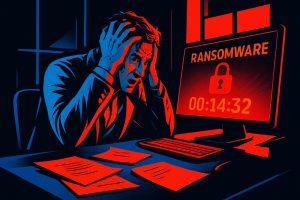
- Ransomware: Malicious software that encrypts the company’s files and demands a ransom to release them. Attacks have become more targeted and the amounts demanded higher.
- Phishing and spear phishing: Fraudulent emails that mimic suppliers, banks or even colleagues, aiming to steal credentials or induce improper bank transfers.
- Compromise of Microsoft 365 and cloud accounts: With the massive adoption of cloud tools, business accounts have become a priority target for attackers.
- Supply chain attacks: Cybercriminals compromise suppliers or partners to indirectly access the networks of target companies.
- Vulnerabilities in outdated equipment: Routers, firewalls and computers with outdated software remain a frequent entry point.
According to data from the National Cybersecurity Centre, SMEs represent a growing share of cyberattack victims in Portugal, often without even realising they have been compromised for weeks or months.
Essential Cybersecurity Measures for Your Business
There is no single solution that solves everything, but there is a set of best practices that, applied together, form a robust defence proportional to the reality of an SME.
- Multi-factor authentication (MFA) on all accounts: Enabling MFA on Microsoft 365, email and management systems is one of the measures with the greatest impact and lowest cost. It makes unauthorised access far more difficult, even when a password is compromised.
- Regular, tested backups: Keeping up-to-date backup copies, stored outside the main network (offsite or secure cloud), is the primary line of defence against ransomware. Testing the backup periodically is just as important as making it.
- Endpoint protection with a professional solution: Tools such as Sophos Intercept X offer advanced protection against malware, ransomware and zero-day threats, going far beyond traditional antivirus.
- Up-to-date updates and patches: Keeping operating systems, applications and network equipment firmware always updated eliminates a large part of the vulnerabilities exploited by attackers.
- Employee training: The human factor remains the weakest link. Regular awareness sessions to identify phishing and risky behaviour make a real difference.
- Robust password policy: Unique, long passwords managed through a corporate password manager (such as Keeper or Bitwarden Business) significantly reduce the risk of compromise.
- Network segmentation: Separating the office network from the guest network and critical systems limits the spread of any infection.
Remote Work and Mobility: Risks You Can’t Ignore
Remote work is here to stay, but it has brought new attack vectors. When employees work from home or on the move, company data travels outside the protected office perimeter, often over home networks with no security configuration at all.
To mitigate these risks, it is essential to ensure that all remote access is done through a corporate VPN, that the devices used have endpoint protection installed and centrally managed, and that there is a clear policy on the use of personal devices for professional purposes (BYOD policy). If your company doesn’t yet have these practices in place, our page on remote work security explains how to get started.
Additionally, identity and access management (IAM), controlling who has access to what and revoking access when an employee leaves the company, is an often-neglected area that can have serious consequences.
Why Consider an External IT Partner for Cybersecurity
Most SMEs don’t have the internal resources to maintain an IT team dedicated to security. This is where it makes sense to turn to a specialised external partner. An IT outsourcing provider in Porto with cybersecurity experience can continuously monitor your company’s infrastructure, apply updates and patches, manage security solutions and respond quickly in the event of an incident.
This approach has clear advantages over hiring in-house: predictable costs, access to specialised skills and coverage even during holiday periods or absences. For an SME, it is often the smartest option, both financially and in terms of effectiveness.
When evaluating an IT partner, make sure they have proven experience with tools such as Sophos, Microsoft 365 and business backup solutions, and that they offer clear service level agreements (SLAs) for emergency situations.
Frequently Asked Questions about Cybersecurity for SMEs
My company is small, hackers won’t waste time on me, will they?
This is one of the most dangerous myths in cybersecurity. Modern attacks are, for the most part, automated and don’t discriminate by company size. Cybercriminals look for vulnerabilities, not revenue. SMEs are often easier targets precisely because they invest less in protection, which makes them attractive to those seeking a quick return with minimum effort.
How much does it cost to implement basic cybersecurity measures?
The measures with the greatest impact, such as enabling MFA, keeping systems updated and training employees, have very low or no cost. Endpoint protection and professional backup solutions for an SME with 10 to 20 users may represent a few dozen euros per month. Compared to the average cost of a ransomware incident (which can reach tens of thousands of euros between ransom, downtime and recovery), the investment is clearly justified.
What should I do if my company suffers a cyberattack?
The first action should be to isolate the affected systems from the network to prevent the spread. Then, contact your IT partner or a company specialising in incident response immediately. Do not abruptly shut down equipment, as this can hinder forensic analysis. Preserve the logs and document everything. If personal data has been compromised, the company is legally obliged to notify the CNPD within 72 hours, under the GDPR. Having an incident response plan prepared in advance greatly speeds up recovery.
Protect Your Business with MEGABIT
At MEGABIT, we help SMEs in Porto and Greater Porto implement cybersecurity strategies tailored to their reality and budget. From configuring Sophos and Microsoft 365 solutions to managing backups and training teams, we stand by your business every step of the way.
If you want to know how secure your infrastructure currently is, or simply where to start, talk to us. Send an email to <a href="mailto:comercial@megabit.pt“>comercial@megabit.pt and one of our specialists will get in touch to understand your company’s needs, with no obligation.
MEGABIT helps SMEs in Porto protect their data and systems. Find out more about Cybersecurity for SMEs in Porto and contact MEGABIT for a no-obligation quote.
Want to be notified when we publish our next article or video?
Free. Get notified as soon as we publish. No spam, easy to unsubscribe.